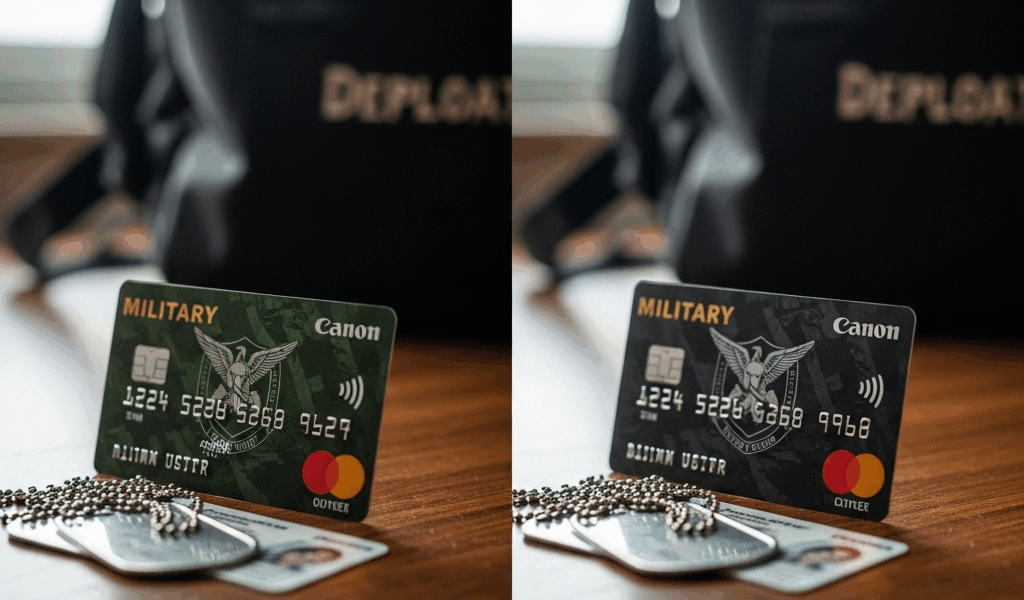
USAA vs Navy Federal — Which Military Bank Is Better in 2026
The USAA vs Navy Federal debate has gotten complicated with all the “just pick one” noise flying around. As someone who has held accounts at both institutions for over a decade — USAA since commissioning, Navy Federal after a finance officer at Fort Campbell told me I was actively losing money by not joining — I learned everything there is to know about how these two actually perform in the real world. She was right, by the way. Today, I will share it all with you.
The 30-Second Answer
Short version: USAA for insurance and customer service when things go sideways. Navy Federal for loans, credit cards, and primary checking if rewards matter to you. A huge chunk of career military families — probably the majority of people I’ve compared notes with over the years — run both simultaneously. They treat them as complementary rather than competing. That’s not a cop-out. It’s genuinely the smart play.
That said, most people don’t want two financial institutions in their life. Fair. Here’s the honest tiebreaker: buying a car or a house in the next two years? Go Navy Federal first. Do you own a vehicle and need to insure a home or apartment? USAA earns its spot immediately. Simple as that.
One more thing before we get into the weeds. Neither institution is perfect — at all. USAA dropped the ball on a claim timeline during a deployment while my wife was handling everything alone. Navy Federal declined a credit limit increase with zero explanation right before a PCS when I needed flexibility most. Both have frustrated me at exactly the wrong moments. The goal here isn’t cheerleading. It’s helping you figure out where each one actually delivers and where each one will let you down.
Banking and Checking Comparison
Dragged through three PCS moves in four years, I started paying serious attention to which account actually worked when I was stuck in a hotel room in Germany waiting on housing that was three weeks out. That stretch taught me more about military banking than any comparison article ever did. So, without further ado, let’s dive in.
ATM Access and Fee Reimbursement
Both institutions reimburse ATM fees. The mechanics, though, are different. Navy Federal covers up to $10 in ATM fees per statement cycle on their free checking accounts — a limit that feels tight fast when you’re overseas hitting ATMs every few days. USAA reimburses up to $15 per month on their Classic Checking. Still not unlimited, but slightly more breathing room.
Where this actually matters is OCONUS. Deployed or stationed abroad, you’re hitting local ATMs constantly. The $15 USAA ceiling gets eaten up faster than you’d expect in places like South Korea or Bahrain where a single transaction runs $3–5. Neither institution has actually solved this problem. I ended up opening a Charles Schwab Investor Checking account — specifically the one with unlimited ATM reimbursements worldwide — as a third account just for that purpose. Worth mentioning. Don’t make my mistake of figuring that out at month three of a deployment.
Overseas and Deployment Access
USAA’s mobile app has been battle-tested by millions of service members and it shows. Mobile deposit, bill pay, transfers — all of it works on spotty connections without much drama. Their customer service line runs 24/7 and their reps know what a power of attorney is and why a spouse might be calling from a stateside number to manage an account. That context matters more than people realize until they need it.
Navy Federal’s app has genuinely improved since 2022 — cleaner interface, reliable mobile deposit, much less of the clunkiness it had before. Their on-base branches are a serious advantage stateside. There’s a Navy Federal branch on almost every major installation. USAA has no physical branches anywhere. That distinction becomes very real when you need a cashier’s check or a notarized document two hours before a move-out inspection.
Fee Structures
Neither charges monthly maintenance fees on standard checking — that’s the baseline expectation at this point and both clear it. USAA’s free checking requires a $25 minimum opening deposit. Navy Federal’s Free Active Duty Checking has no minimum at all. Navy Federal also attaches a $1,000 interest-free overdraft line of credit to their checking account — a feature USAA doesn’t directly match. Small thing. Genuinely useful thing when a BAH deposit is 48 hours late.
Auto and Home Loans
This is where Navy Federal separates itself most clearly. It’s also where I made my first real financial mistake by not switching sooner — probably cost me somewhere around $600 on my first car loan. Probably should have opened with this section, honestly.
Auto Loan Rates
In early 2026, Navy Federal’s auto loan rates for new vehicles start around 4.54% APR for well-qualified borrowers on terms up to 36 months, climbing to roughly 5.99% APR at 60 months. USAA’s comparable starting rate sits around 5.39% APR for new vehicles. Not dramatically higher — but on a $42,000 truck purchase, which is basically the median new vehicle price right now, that spread over 60 months works out to roughly $700–900 in total interest. Not nothing. That’s a weekend trip or two months of groceries.
Navy Federal also runs promotional rates periodically, particularly for members with direct deposit set up through them. Their rate-beat guarantee — where they attempt to beat a competing offer — is a legitimate negotiating tool at the dealership. I’ve used it in person. It works.
VA Home Loans and Mortgage Products
Both are approved VA lenders and both handle VA loans competently. The difference shows up in jumbo VA loans and in processing speed. Navy Federal’s mortgage team moves faster — that’s been my experience and the experience of several O-4s and E-7s I’ve swapped notes with over the years. They also offer the Homebuyers Choice loan, a 100% financing conventional product for members who’ve exhausted VA entitlement or prefer not to use it. USAA doesn’t directly match that product.
USAA’s mortgage process has historically run slower. They’ve improved, but if you’re PCSing against a hard move-in date, processing speed matters more than a marginal rate difference. For a $380,000 home in 2026, USAA’s VA rates are running roughly 0.125–0.25% higher than Navy Federal’s on comparable terms. Over 30 years that compounds into real money — but rates shift constantly, and you should pull live quotes from both before signing anything.
Personal Loans
Navy Federal’s personal loan rates start around 8.99% APR. USAA’s start around 10.34% APR. Military families need emergency loans more often than civilians do — PCS expenses, vehicle repairs at remote duty stations, deployment-related household crises. That spread matters in those moments. Navy Federal wins this category clearly and it’s not particularly close.
Insurance — Where USAA Dominates
Probably should have opened with this section, honestly, because for a lot of military families this is the entire conversation. Navy Federal doesn’t offer insurance products. Full stop. They’re a credit union. So if you’re comparing the two purely on insurance, USAA wins by default — but what actually matters is whether USAA’s insurance beats GEICO, State Farm, or Progressive for military members specifically.
It does. Usually by a significant margin.
Auto Insurance
USAA’s auto insurance consistently finishes at or near the top of J.D. Power’s annual satisfaction rankings. In the 2025 survey, USAA ranked first in overall satisfaction for the eighth consecutive year — 739 out of 1,000 points, versus GEICO at 692 and State Farm at 659. Those aren’t rounding errors. Those are meaningful gaps in customer experience data.
The military-specific features are why. USAA offers a storage discount when your vehicle is garaged during deployment — up to a 60% rate reduction, which I used personally during a 9-month rotation to Kuwait. That’s $400–600 in real savings depending on your base rate. They don’t cancel coverage during deployments. Their claims process operates with the understanding that your spouse might be handling everything alone. That sounds intangible until you’re eight time zones away and your wife is managing a rear-end collision in a Walmart parking lot at 6pm on a Tuesday. That’s what makes USAA endearing to us military families.
Renters and Homeowners Insurance
USAA’s renters insurance starts around $12–15 per month for military members and covers personal property including uniforms and gear. Their homeowners claims process is — in my direct experience — faster and less adversarial than most competitors. I filed a homeowners claim in 2023 after hail damage. $4,200 in repairs. Check arrived in 11 days. Friends who’ve filed similar claims with State Farm have described timelines of 3–6 weeks.
USAA also covers uniforms under renters and homeowners policies at no additional cost, up to a set limit. It’s one of those details you don’t think about until your barracks room gets broken into and you discover your dress blues run $800 to replace from scratch.
Life Insurance
Both offer life insurance products separate from SGLI. USAA’s term life rates are competitive and they underwrite specifically for military occupational hazards — things some civilian insurers charge extra for or exclude entirely. I’m apparently in a hazardous-adjacent MOS and USAA works for me while two other carriers I tried never came close on price. If you’re in a hazardous MOS or flying, shop USAA first before you go anywhere else.
Credit Cards Comparison
Navy Federal runs away with this category on pure rewards value — particularly for the spending categories military families actually use every month.
Navy Federal’s Flagship Cards
But what is the Navy Federal More Rewards Amex, really? In essence, it’s a no-annual-fee card earning 3X points on supermarkets, gas, transit, and restaurants. But it’s much more than that for a military family running $800–1,000 a month through those four categories. Points redeem for cash back at 1 cent per point and transfer to travel partners at reasonable rates.
The Navy Federal Visa Signature Flagship Rewards card charges a $49 annual fee but earns 3X on travel and 2X on everything else, plus a $49 annual travel credit that effectively zeros out the fee. Sign-up bonus in 2026 is sitting at 40,000 points after $4,000 in spending in the first 90 days — worth roughly $400 in travel redemptions. That was worth it without even factoring in the ongoing earn rate.
Active duty members also qualify for SCRA benefits on Navy Federal cards that eliminate interest charges during deployments. Know about this benefit before you deploy carrying a balance. Call them. It takes about four minutes.
USAA’s Card Lineup
USAA’s credit cards are functional. They’re not competitive on rewards. Their best cashback card earns 2.5% on all purchases — a solid flat-rate product with no annual fee — but it doesn’t beat the Navy Federal More Rewards card for members who concentrate spending in bonus categories. USAA’s actual strength here is in their SCRA application process, which tends to be more proactive, and in the convenience of having banking, insurance, and credit cards under one login. One phone number. One app.
Honestly, if rewards are the priority, Navy Federal’s lineup wins. If you want everything integrated in one place, USAA’s card makes sense as part of their broader ecosystem. It depends what you’re optimizing for.
Which Card for Which Spending
- Groceries and gas — Navy Federal More Rewards Amex, 3X points, no annual fee
- Travel and hotels — Navy Federal Visa Signature Flagship, 3X points on travel
- Everything flat-rate — USAA Cashback Rewards Plus, 2.5% across the board
- Deployed with a balance — Either card under SCRA; call your issuer before you leave, not after
The Honest Bottom Line
Force me to pick one — just one — for a junior enlisted member starting out on an E-4 paycheck, and I say Navy Federal. The loan rates, the on-base branch access, the credit card rewards, and the free checking features all point the same direction. The difference in auto loan rates alone over a first car purchase justifies the decision. That’s real money on a limited income.
For mid-career and senior members with vehicles to insure, homes to protect, and families managing finances solo during deployments — USAA earns a spot in the rotation specifically for insurance and customer service. The peace of mind from an insurer that understands deployment cycles and doesn’t penalize you for them is worth slightly higher premiums compared to shopping purely on price. First learned that lesson the hard way. That was 2019.
While you won’t need to become a personal finance expert to make this work, you will need a handful of accounts set up correctly. Navy Federal as your primary banking and lending institution. USAA for insurance and as a secondary account with their customer service infrastructure as a backstop — at least if you own anything worth insuring. That’s the setup most military families land on after a few years of trial and error. Might as well skip the error part.




Leave a Reply